MARKET REVIEW
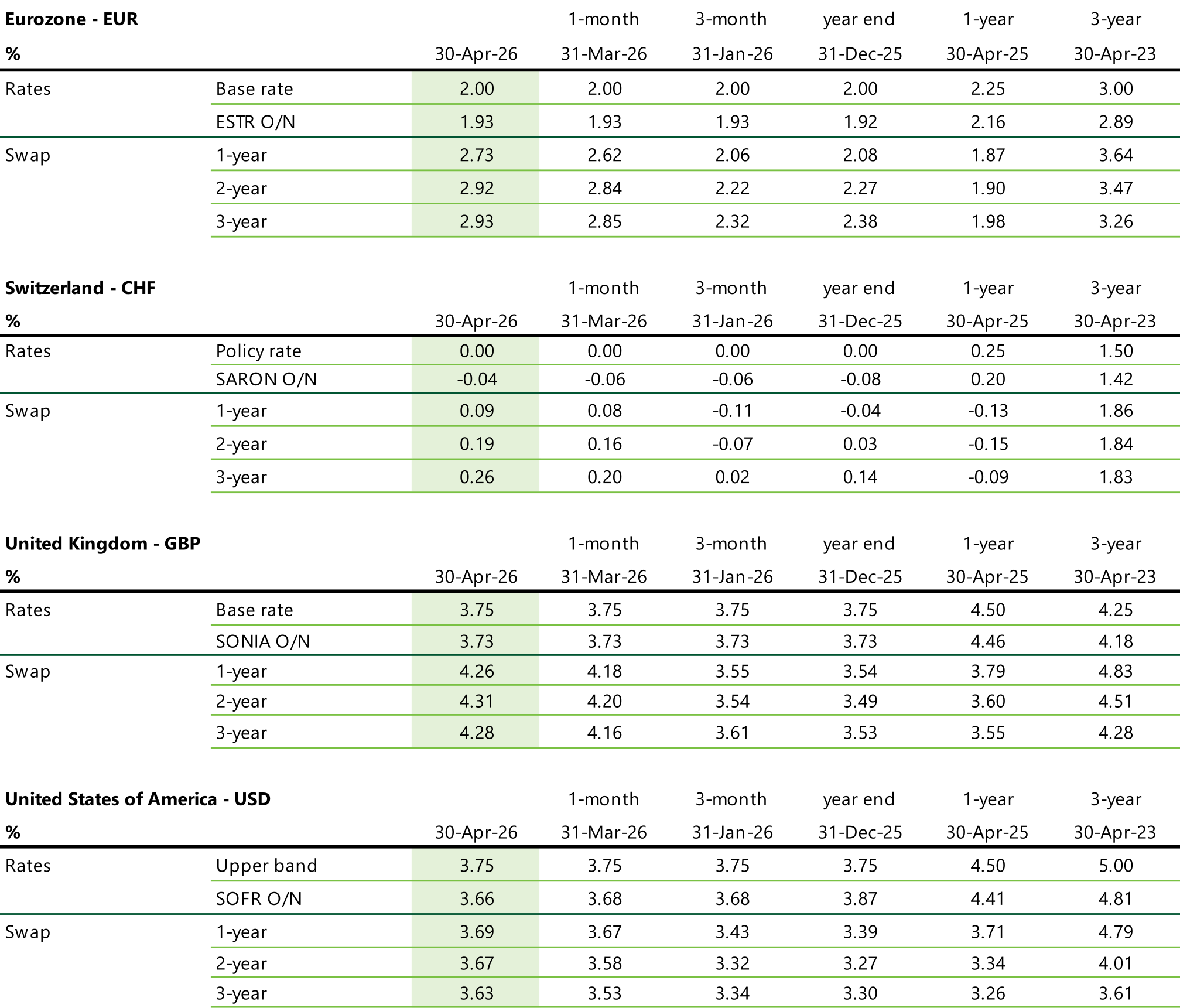
European Central Bank (ECB): The ECB Governing Council voted unanimously to maintain its key deposit rate at 2%, as widely expected. However, ECB President Christine Lagarde commented the war in the Middle East has led to "such uncertainty that we need to understand and revisit that at our next policy meeting," and that the ECB was moving away from its baseline of a relatively swift end to the war and less impactful increase in energy costs. Meanwhile, the annual euro area Harmonised Index of Consumer Prices (HICP) inflation rose sharply to 2.6% in March, up from 1.9% in February and slightly above the preliminary estimate of 2.5%. Meanwhile, flash estimates for April indicated that annual HICP inflation jumped to 3%. GDP data showed 0.1% quarter-on-quarter expansion in the eurozone in the first quarter of 2025, missing expectations of 0.2%. The ZEW Economic Sentiment Indicator dropped to its lowest level since December 2022, falling from to -8.5 in March to -20.4, far beneath expectations of -3.6. Likewise, consumer confidence fell to its lowest level since December 2022, reaching -20.6, from March’s -16.4.
Swiss National Bank (SNB):There was no SNB meeting in April. Manufacturing activity strengthened further, with the UBS Manufacturing PMI rising to 54.5 in April from 53.3 in March, the strongest reading since late 2022, signalling sustained expansion in output and order books, although manufacturing employment remained marginally contractionary. The KOF Economic Barometer recovered to 97.9 in April from 96.1 in March, suggesting some stabilisation in growth expectations, though the index remained below its long-term average, reflecting continued fragility in demand and labour market prospects. Inflation edged higher, with headline CPI rising to 0.3% in March, up from February’s 0.2%, while annual core inflation remained at 0.4%, underscoring limited underlying price pressures. By contrast, household confidence deteriorated further, with the SECO consumer sentiment index falling sharply to –43 in March (released on 10 April), from –30 in February, marking its weakest level in over a year and highlighting ongoing caution among consumers despite improving activity indicators. Overall, the data continued to support the Bank’s cautious stance, balancing tentative signs of recovery against subdued inflation and lingering downside risks to growth.
UK Bank of England (BoE): At its March meeting, the Monetary Policy Committee voted 8–1 to leave the bank rate unchanged at 3.75%, as widely expected. Governor Andrew Bailey described the decision as a “deliberately active hold” and warned “the war in the Middle East is causing inflation to rise again this year". Policymakers provided three potential inflation scenarios rather than a single forecast. In the less inflationary outcomes, energy costs either fade quickly or generate limited wage and price spillovers. Inflation is expected to peak at just above 3.5% in late 2026 before easing back towards target, although interest rates would still need to be higher than markets had previously expected. In a more adverse scenario, a larger and more persistent energy shock drives stronger second‑round effects, pushing inflation above 6% in early 2027 and leaving it above target after three years. Elsewhere, the headline CPI inflation rate rose to 3.3% in March from February’s 3%, in line with expectations. The print marked the highest reading in three months, with a rise in motor fuel costs acting as the largest contributor. The unemployment rate fell to 4.9% in the three months to February, down from January’s five year high of 5.2%. The GfK Consumer Confidence Barometer fell to -25 in March, down from -21 recorded in February and below expectations.
US Federal Reserve (Fed): The Federal Open Market Committee voted to keep US interest rates at 3.5%–3.75%, in a decision more divided than markets expected, with four members dissenting, the most since 1992. Policymakers noted persistent inflation and signs of a softening labour market, while Fed Chair Jerome Powell stressed inflation remained above the 2% target. Although forward guidance was largely unchanged, the level of dissent reflected growing internal debate over the future path of monetary policy. Meanwhile, the Manufacturing Purchasing Managers Index (PMI), as reported by the Institute of Supply Management (ISM), rose to 52.7 in March, up from 52.4 in February and above expectations of 52.5, marking the third consecutive month of growth. The ISM Services PMI fell to 54.0 in March, down from February’s 56.1 and below forecasts of 55.0. Elsewhere, the annual Consumer Price Index (CPI) inflation rate rose to 3.3% in March, up from February’s 2.4% as expected, with annual core CPI inflation (which excludes more volatile items, such as food and energy) also rising slightly to 2.6%. GDP growth in the first quarter reached 2% on an annualised basis according to initial estimates, up from Q4 2025’s 0.5% but below expectations of 2.3%. Non-farm payrolls indicated that the US economy added 178,000 jobs in March, a significant rise from February’s downwardly revised loss of -133,000 and far above estimates of a 60,000 rise.
Figure 1: Central bank rates history and future market pricing1

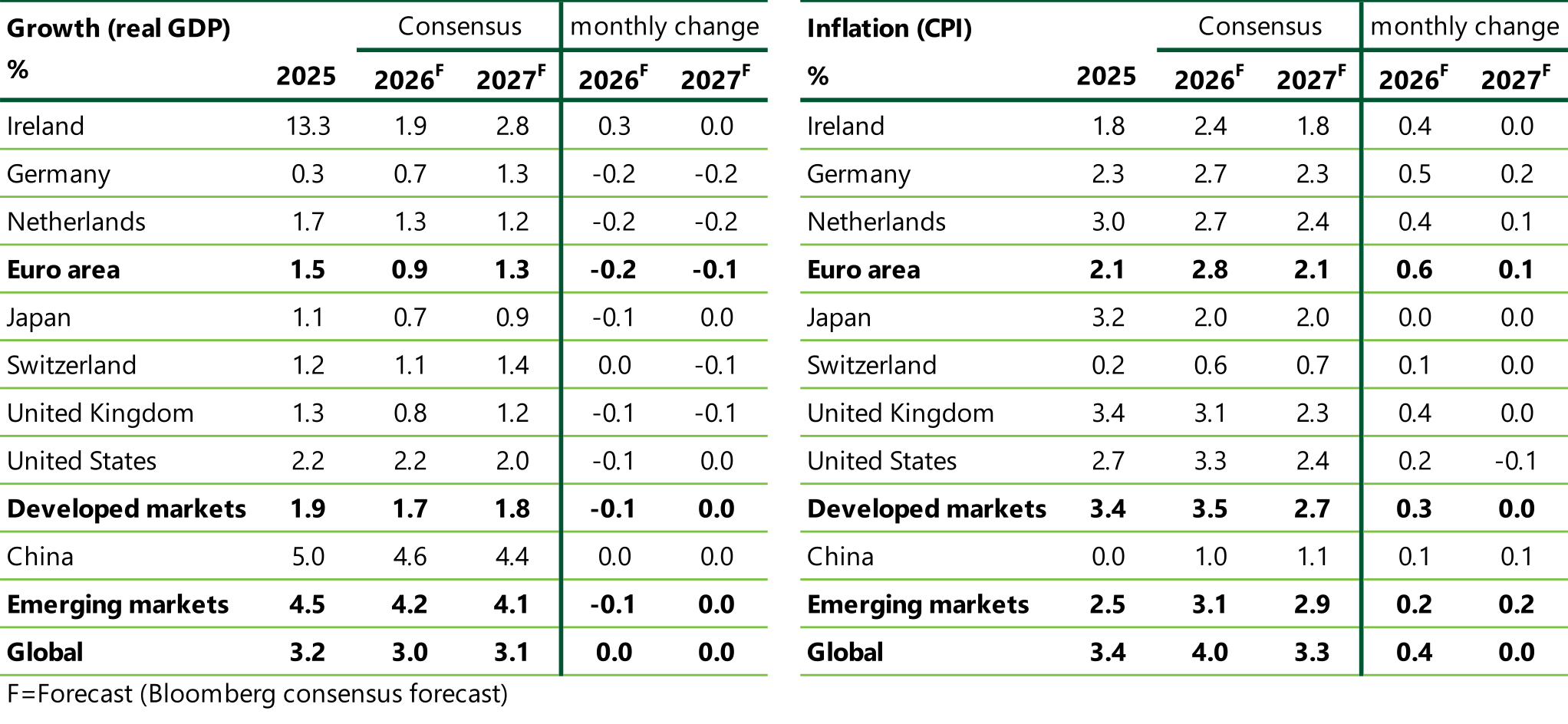
Key interest rates and global data1